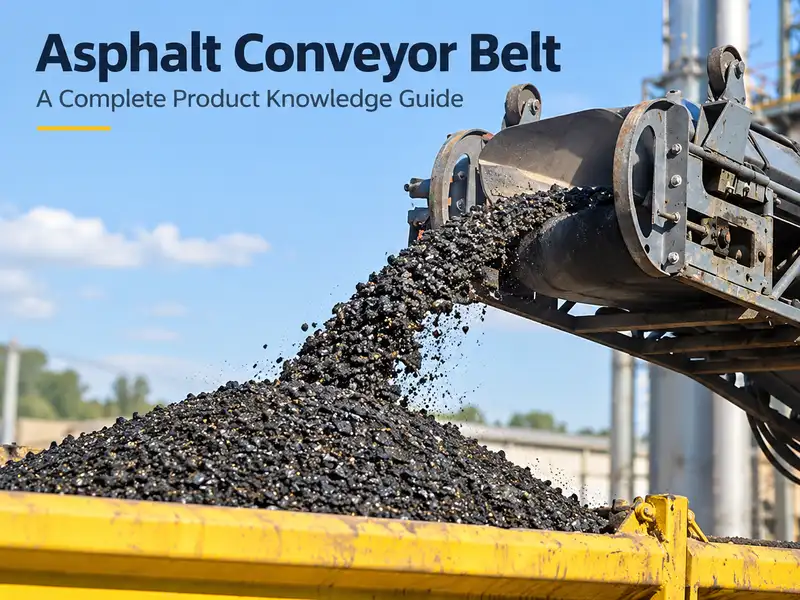
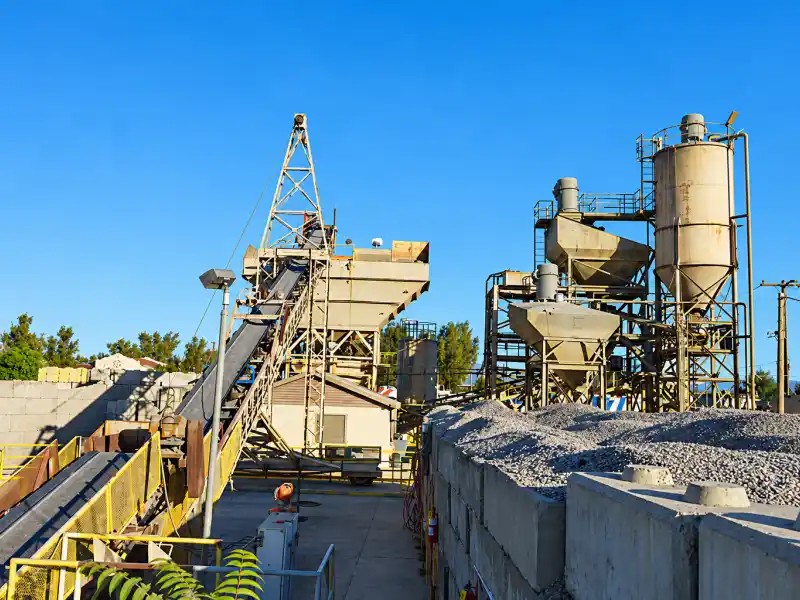
An asphalt conveyor belt rarely meets one uniform condition. Hot aggregate from the dryer, RAP with sticky fines, ambient cold feed and occasional cleaning or fuel contact all occur in one plant. Each stream changes the balance of heat, abrasion, impact and adhesion.
The practical answer is not a single “asphalt grade.” It is a finished belt whose cover, EP textile carcass, bonds, edge and splice suit the duty. Abrasion resistance does not prevent bitumen pickup. An intact cover does not prove a sound carcass bond. Product evaluation therefore follows the load path through the belt.
The chain-and-slat conveyor inside a paving machine is outside this discussion. The focus is rubber belting used for plant feed, hot aggregate and RAP.
1. Asphalt Conveyor Belt Applications in Hot Aggregate and RAP Handling
Temperature, shape, moisture and bitumen content change the likely failure mechanism and the product requirement.
1.1 Hot Aggregate Conveying
At the dryer discharge, the carry cover receives hot, angular and abrasive mineral particles. Heat aging reduces flexibility, while sharp particles and the material drop add cutting and impact. Normal temperature, start-up peaks and shutdown heat soak produce different aging paths, so a single spot reading is insufficient.
1.2 RAP and Recycled Asphalt
Tip – What is RAP? Reclaimed asphalt pavement (RAP) is milled or removed asphalt pavement processed for reuse. It consists of aged bitumen, mineral aggregate and fines. In an asphalt plant, it is reintroduced at a controlled proportion and brings bitumen contact, abrasive solids and a thermal history to the belt.
RAP brings old bitumen, aggregate and fines into the same load. The cover must handle wear while interacting with a sticky hydrocarbon-bearing material. A tough compound holds a bitumen film; a surface that sheds material well often lacks cut or wear resistance.
1.3 Cold Feed and General Aggregate
Cold-feed belts normally operate at ambient temperature. Stone, sand and recycled material remain abrasive or sharp, but heat aging and bitumen pickup matter less.
| Material stream | Dominant contact | Product question |
|---|---|---|
| Hot aggregate | Heat, impact and abrasive mineral particles | Do the cover, bond and carcass share the same heat path? |
| RAP | Bitumen, fines, cutting and surface pickup | Does the carry face balance wear resistance with bitumen release? |
| Cold aggregate | Ambient abrasion and impact | Which cover grade and EP construction fit the load and layout? |
2. Asphalt Conveyor Belt Design Factors in Asphalt Service
An asphalt conveyor belt is a composite under several loads at once. Rubber name, cover grade and the phrase “heat resistant” cannot describe the full response.
2.1 Heat Travels Through the Whole Belt
Hot aggregate heats the carry cover first, then the fabric plies and bonding interfaces as the belt runs, stops and cools. A heat-resistant cover does not prove that the construction retains adhesion. Thermal requirements should cover the cover, carcass and bonds together.
2.2 Bitumen and Fuel Reach More Than the Surface
Bitumen, diesel, burner fuel, release agents and cleaners behave differently on rubber. Contact takes the form of a film, coating, spill or material trapped at an edge. Rubber swells, softens, hardens or loses strength while the visible cover remains uniform.
2.3 Abrasion Rarely Acts Alone
Fine aggregate polishes the surface, sharp stone cuts it and a high material drop deforms it. Abrasion resistance addresses gradual loss; tear resistance matters more for angular particles. Impact also depends on cover thickness and the support beneath the loading point.
2.4 Conveyor Layout Changes the Product Boundary
Cover thickness, carcass stiffness and splice structure must work with pulley diameter, trough angle, center distance and take-up. Material suitability also includes mechanical fit.
| Service signal | What it tests | What it does not establish |
|---|---|---|
| High temperature | Cover aging | Adhesion and carcass response |
| Heavy abrasion | Cover wear | Cutting, impact and pickup |
| Hydrocarbon contact | Surface compatibility | Bond loss after combined exposure |
| Short pulley layout | Flex performance | Heat aging and material wear |
3. Asphalt Conveyor Belt Heat Exposure and Aging
Heat resistance should be written as a condition, not a slogan. The rubber response depends on material temperature, exposure time and the property being judged.
3.1 Defining the Temperature Profile
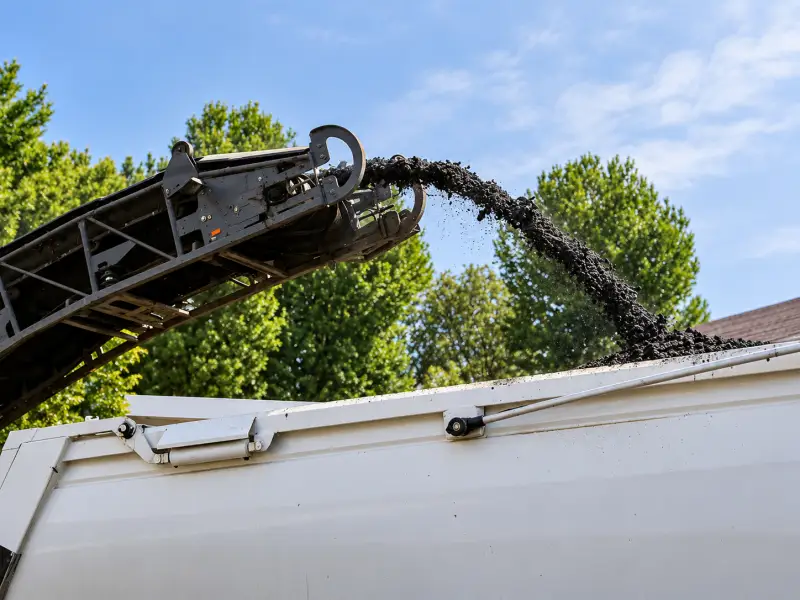
Your profile should start with the material on the carry cover and add peak temperature, duration, radiant heat and cooling cycles. A start-up surge differs from continuous operation. Shutdown matters because heat soaks inward after airflow stops.
3.2 Cover Aging at the Working Surface
Thermal aging stiffens the cover, reduces elongation and initiates cracks that pulley flexing enlarges. The visible result resembles wear, although heat first reduced elasticity. Compound and cure system determine the rate.
3.3 Heat at the Textile and Bond Interface
The EP carcass and bonds share the thermal path. As adhesion declines, cover or ply separation begins beneath intact rubber. Evidence should connect the tested cover, EP construction, thickness, bond system and heat exposure.
Maximum temperature is product-specific. It depends on compound, construction, time and measured property, so a supplier should state a tested boundary for the finished construction.
4. Asphalt Conveyor Belt Wear Cutting and Impact
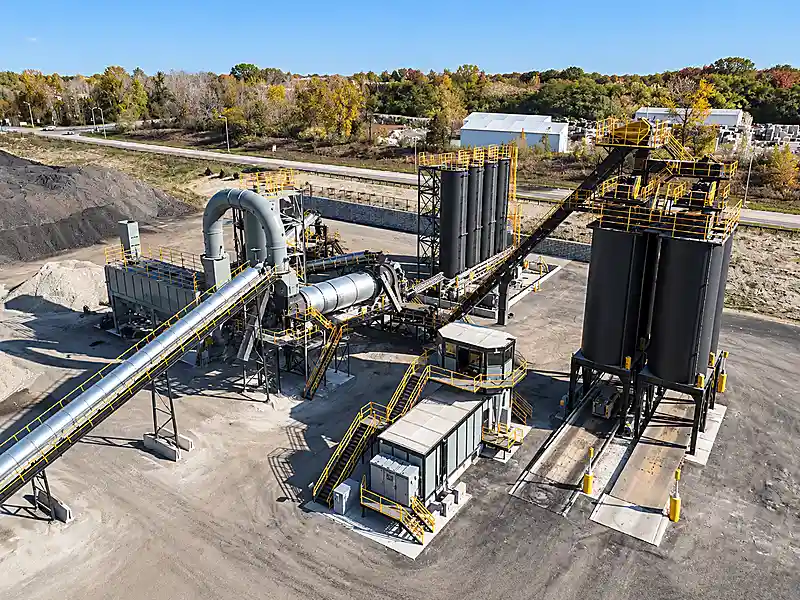
Wear diagnosis begins with the damaged form. A broad polished path, narrow groove, sharp cut and crushed loading area point toward different product requirements.
4.1 Reading Surface Wear
Fine mineral matter removes rubber gradually. A narrow repeating mark indicates a concentrated stream or contact condition. Cover grade and compound influence tested abrasion resistance; original and remaining thickness show the wear reserve.
4.2 Cutting and Impact at the Loading Point
Angular aggregate cuts or gouges the cover, especially beneath a transfer. Large lumps add local deformation. Tear-resistant rubber helps the surface, but the EP carcass and bond must also suit the impact. Thick rubber over a weak interface separates instead of protecting the load path.
4.3 RAP Pickup and Sticky Fines
RAP combines abrasive particles with bitumen. Material adheres, collects in cuts or bridges small irregularities. Hard rubber is not automatically clean-running. Compound chemistry, fillers, surface condition, temperature and residence time affect pickup, so RAP should be assessed separately from a dry-abrasion grade.
4.4 Cover Thickness and Conveyor Fit
Additional carry-cover thickness increases sacrificial rubber, belt mass and bending demand. It improves wear reserve while making a short-pulley layout less suitable. Impact allowance, pulley diameter, troughing, tension, splice thickness and take-up should be reconciled.
| Wear form | Likely material concern | Related construction check |
|---|---|---|
| Broad gradual loss | Abrasion resistance and wear reserve | Compound, cover grade and carry thickness |
| Sharp cuts and gouges | Tear or cut resistance | Tough cover and supported loading area |
| Local crushing | Impact response | Carcass, bond and cover thickness beneath the load |
| RAP film or buildup | Bitumen interaction | Surface behavior at the real contact temperature |
5. Asphalt Conveyor Belt Media Contact and Compatibility
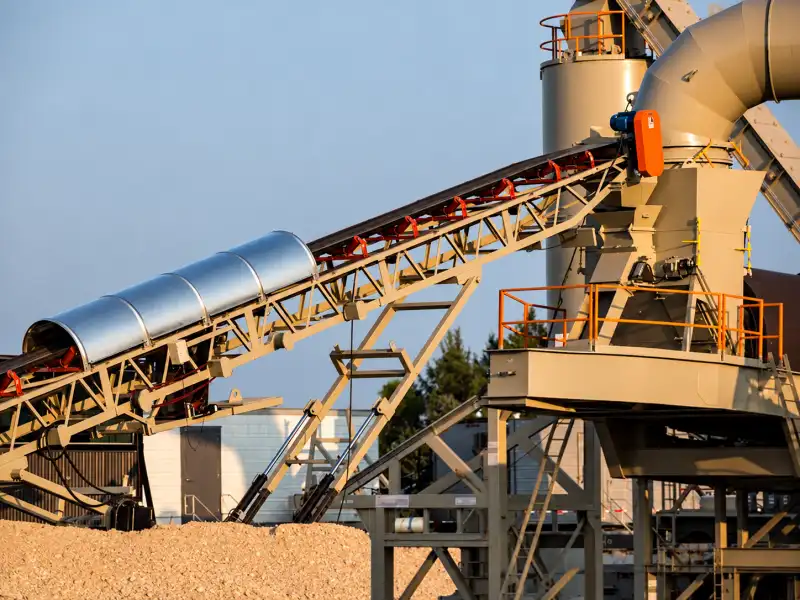
Heat is not the only environmental load in an asphalt plant. Bitumen-rich RAP, burner fuel, release agents and cleaning products alter the rubber and the interfaces beneath it.
5.1 Medium Compatibility Is Specific
An “oil-resistant” belt has been evaluated against a named medium. That statement does not cover every bitumen, fuel, solvent or cleaner. Rubber swells, softens, hardens or loses strength after exposure. A useful test condition identifies the medium, temperature, duration and property change for the supplied compound.
5.2 Combined Heat and Bitumen Exposure
Heat accelerates the effect of a hydrocarbon-bearing medium. A dry-heat compound has limited bitumen compatibility, while an oil-oriented compound is weaker for hot mineral load. Surface compatibility and interface adhesion need separate findings.
| Medium | Surface concern | Interface concern |
|---|---|---|
| Hot bitumen or RAP film | Softening, swelling, hardening or pickup | Loss of cover-to-carcass adhesion after combined exposure |
| Diesel or burner fuel | Hydrocarbon compatibility | Bond strength after repeated contact |
| Release agent or cleaner | Surface property change | Penetration through cracks, cuts or edges |
6. Asphalt Conveyor Belt Rubber Compound Selection
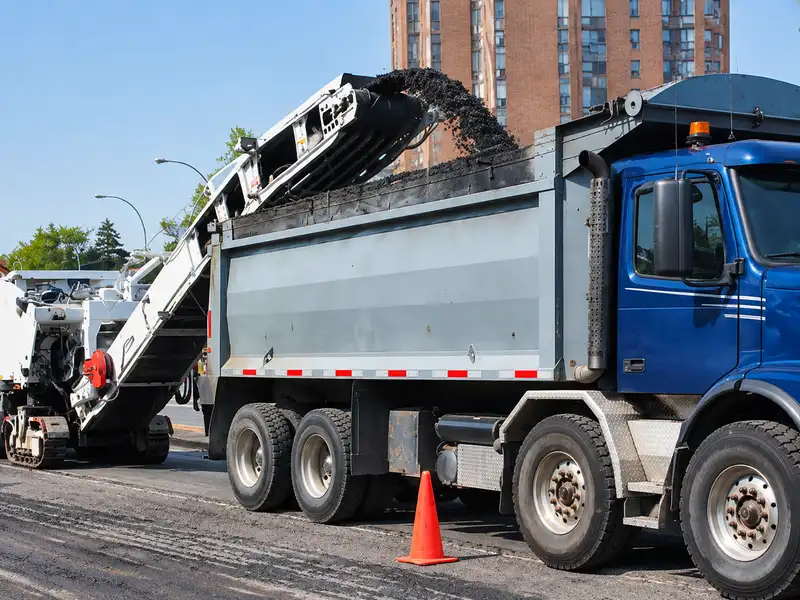
The compound behind a cover grade controls its actual response. Fillers, cure system, plasticizers and processing create the balance in the belt, so an elastomer name describes a family rather than a finished performance.
6.1 NR and SBR Systems
NR and SBR systems are common where toughness and dry abrasion resistance are central. NR contributes elasticity and tear behavior; SBR provides useful abrasion performance with stable processing. Their heat, oil and weathering limits still need review outside simple dry-mineral duty.
6.2 EPDM and Heat-Oriented Compounds
EPDM generally resists heat aging, ozone, sunlight and water, so it suits hot, dry conditions. Mineral oil and many hydrocarbons are different: EPDM generally has poor compatibility with them. A heat-oriented EPDM cover is therefore not automatically suitable for bitumen-rich material.
6.3 NBR and Oil-Oriented Compounds
NBR is often considered for mineral oil, grease and selected fuels. Its hydrocarbon resistance does not make it a universal high-temperature cover, and its ozone and heat boundaries still depend on formulation.
| Family or direction | Useful starting point | Main boundary to review |
|---|---|---|
| NR or SBR | Dry abrasion and mechanical toughness | Heat, oil and long-term aging |
| EPDM | Heat aging, ozone and weathering | Bitumen and hydrocarbon compatibility |
| NBR | Mineral oil and grease contact | Heat range, ozone and exact medium |
7. Asphalt Conveyor Belt EP Textile Carcass Design
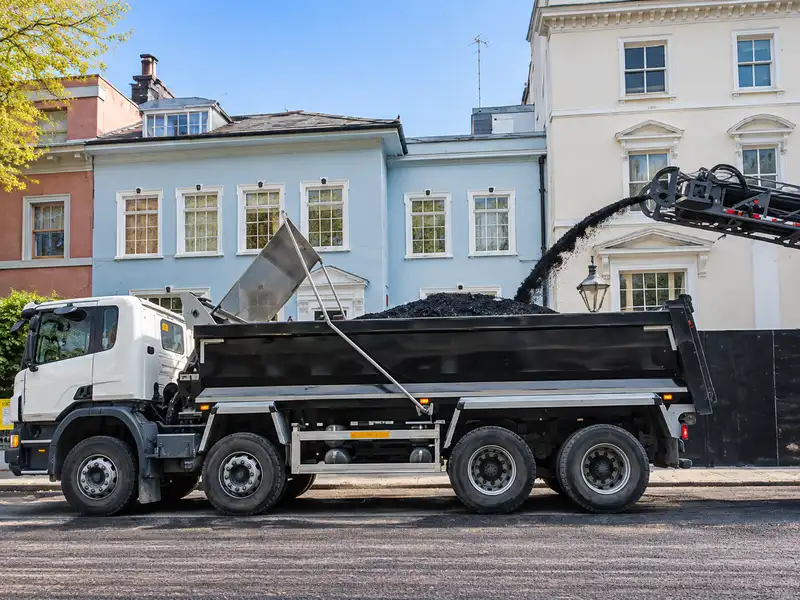
EP textile carcasses are common in asphalt-plant belting because polyester warp and nylon weft combine longitudinal stability, flexible troughing and established textile splicing. The fiber letters differ from the commercial designation.
7.1 EP Letters and the Complete Product Code
The two letters EP identify the carcass materials and carry no strength magnitude by themselves. Once a number is added, such as EP200, the complete designation carries strength-related meaning within a supplier’s naming system. You still need to confirm its unit, reference width, test method and relationship to whole-belt strength.
Considered on its own, EP describes only the carcass type and defines no strength, ply count, cover rubber, thickness or splice quality. Those fields remain independent even when a fuller code such as EP200 adds a strength meaning.
7.2 Strength, Ply Count and Elongation
Strength describes load-carrying capacity. Ply count describes the number of textile layers and is not a synonym for strength. Total thickness includes covers and construction details, so it cannot reveal ply count. Elongation affects take-up and running geometry, while required strength depends on width, center distance, pulley layout and tension.
7.3 Adhesion Between Cover and Carcass
The cover stays bonded to the first ply, and adjacent plies stay bonded to each other. Heat and bitumen attack those interfaces from opposite directions: heat through the cover and medium through cuts, edges or the splice. Adhesion evidence should identify its construction and exposure.
7.4 NN and Steel Cord as Different Product Questions
NN construction suits greater extension and impact response. Steel cord addresses a different boundary, usually when tension and center distance exceed a practical textile belt. Neither replaces EP automatically; layout, splice and impact requirements decide.
8. Asphalt Conveyor Belt Cover Rubber Selection
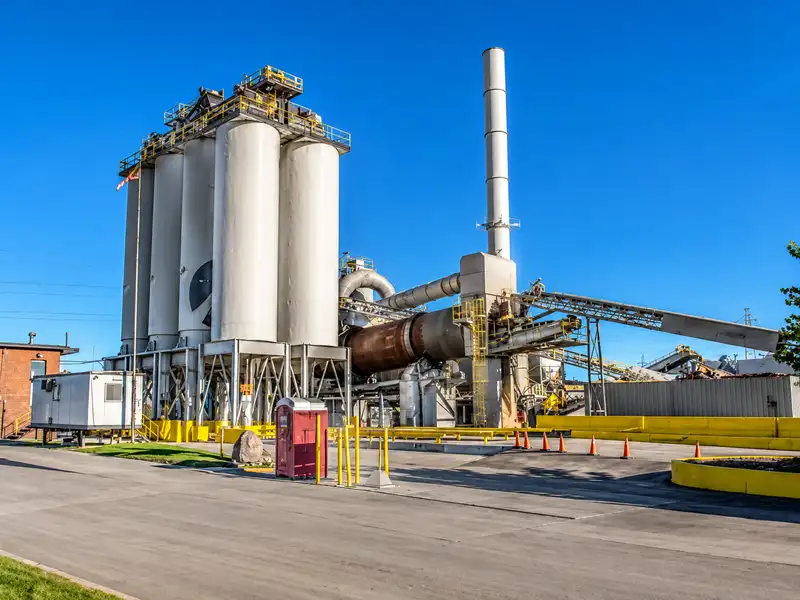
Cover selection becomes useful only when it follows the actual asphalt duty. The same rubber surface meets hot aggregate at one transfer, sticky RAP along another run and abrasive dust on the return side.
8.1 Hot Aggregate Carry Cover
At a hot-aggregate loading point, the carry cover needs thermal aging resistance, flexibility and protection against impact and cutting. No cover grade proves the whole product: carry compound, bond and carcass must share the heat path.
8.2 RAP Contact Layer
RAP places bitumen adhesion directly against the working surface. The cover needs a compound that limits pickup while tolerating abrasive fines and sharp aggregate at the RAP temperature. A low-pickup surface that wears quickly is incomplete, just as a highly abrasion-resistant surface that holds a bitumen film is not clean-running. These are competing requirements.
8.3 Pulley Cover and Edge in Asphalt Dust
The pulley cover sees pulley contact, flexing, dust and fines on the return side. Edge rubber protects the boundary where moisture and abrasive dust enter the carcass. In asphalt service, edge damage turns a local defect into a path for bitumen, water and mineral fines.
8.4 Grade, Compound and Thickness
When you read a cover grade, treat it as a classification of selected properties; the compound is the formulated rubber behind it. DIN-W, DIN-X and DIN-Y commonly indicate wear-oriented, higher-tensile and general-purpose classifications, subject to the exact standard edition and product data. Thickness adds sacrificial material but changes mass and bending strain.
8.5 Heat, Bitumen and Abrasion Performance Claims
A material claim should include compound, specimen, method, exposure, measured property and result. Heat aging without time or temperature is incomplete; a bitumen claim needs its medium and exposure path. Abrasion data cannot predict conveyor belt service life.
| Cover requirement | Asphalt-specific reason | Still to confirm |
|---|---|---|
| Heat-aging resistance | Hot aggregate stiffens and cracks the carry surface | Compound, exposure and bonded construction |
| RAP surface behavior | Bitumen film sticks or collects on the cover | Contact temperature and tested pickup behavior |
| Wear and cut resistance | Aggregate and RAP fines remove or damage rubber | Grade, compound and carry thickness |
| Pulley-side durability | Return dust and pulley flexing affect another face | Pulley cover compound, thickness and flex fit |
9. Asphalt Conveyor Belt Composite Construction
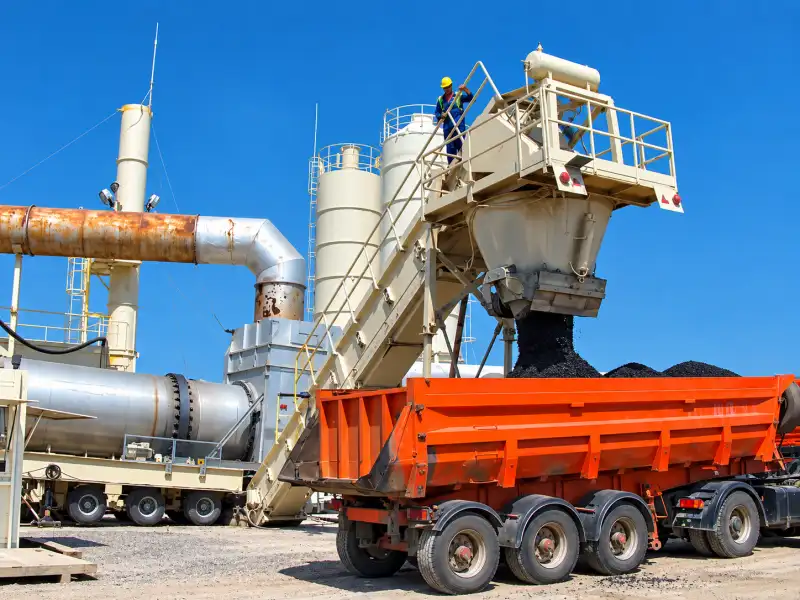
The construction should follow the route by which hot aggregate, RAP, moisture and heat enter the belt. A component that performs well in isolation remains wrong when it does not fit the composite.
9.1 Hot Loading Zone
During hot-aggregate loading, energy enters through the carry cover and continues into the bond and textile plies. A cover thick enough for wear but incompatible with pulley bending is unsuitable for that layout. Impact that deforms the cover also loads the bond and carcass, so the design must keep that path coherent.
9.2 RAP at Edge and Surface
RAP fines collect on the carry surface and move toward the longitudinal edge during tracking variation or spillage. Bitumen and moisture at an exposed edge create a different risk from surface pickup: contamination enters the textile boundary. Edge rubber, cover continuity and textile construction matter together.
9.3 Heat and Bitumen at Bonded Interfaces
Heat arrives through the cover, while bitumen or fuel enters through the surface, a cut, an edge or the splice. The paths meet at the cover-to-ply or ply-to-ply interface. Adhesion evidence on the finished construction is more informative than a cover-only heat result.
9.4 Product Balance
Heat resistance does not correct bitumen incompatibility. RAP pickup performance does not make a soft compound suitable for hot angular aggregate. Strength does not correct excessive stiffness for a small pulley. Finished-belt suitability combines cover, carcass, edge, bond and splice.
| Construction part | Asphalt-plant role | Cross-check |
|---|---|---|
| Carry cover | Meets hot aggregate or RAP | Heat, wear, cutting and surface pickup |
| Textile carcass | Carries tension and controls extension | Strength, plies, elongation and pulley fit |
| Bonding layer | Holds cover and plies together | Heat and medium exposure at the interface |
| Edge rubber | Protects the carcass boundary | RAP fines, moisture and edge integrity |
10. Asphalt Conveyor Belt Textile Splice Continuity
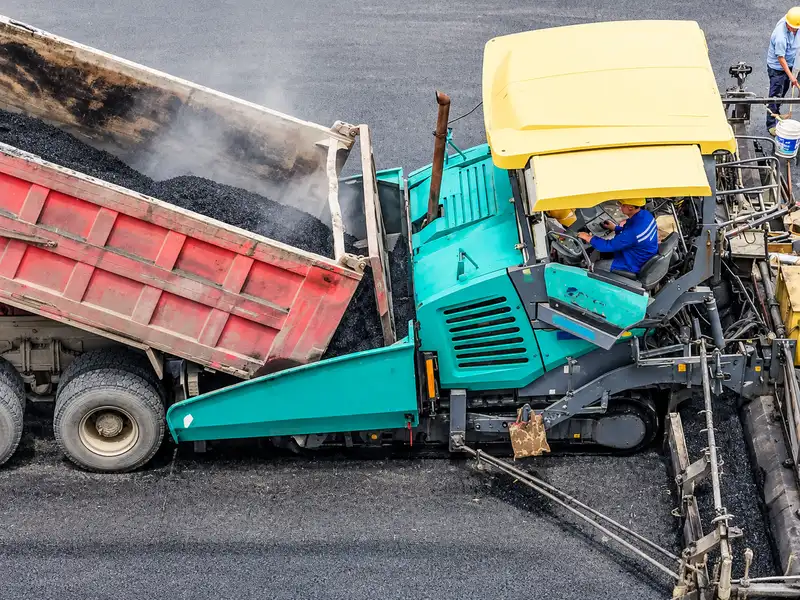
The textile splice is a continuation of the belt body, not a separate belt. Its cover, textile structure and bonding arrangement should follow the same asphalt duty as the surrounding product.
10.1 Textile Splice Structure
The splice transfers load through joined textile plies without an abrupt stiffness change. Cover continuity protects the joint from hot aggregate or RAP, while its edge protects the textile boundary. A different cover direction or weaker bond makes the splice the first visible weak point.
10.2 The Narrow Splice-Cover Strip
Our factory product convention uses a narrow splice-cover strip within about 5 cm at the joining interface. It seals, reinforces or blends the interface and remains part of the belt body. The exact width, structure and inspection requirement follow the approved textile splice procedure and the actual carcass construction; about 5 cm is not presented as a universal industry value.
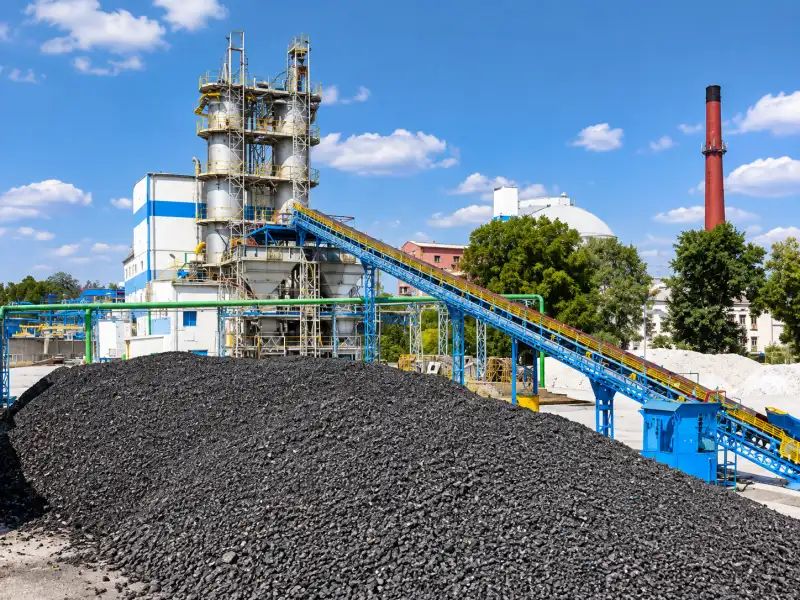
11. Asphalt Conveyor Belt Failure Signs and Causes
Visible damage has to be placed back into the material path. A hardened surface, cut, lifted edge and separated ply share an exposure but represent different product concerns.
11.1 Heat-Related Surface Change
Hardening, fine cracking and reduced flexibility indicate cover aging. A pattern along the hot-material path strengthens that concern, while cracking near a fold or pulley adds a flex question. Temperature history and bonded interfaces should be checked with the surface.
11.2 Mechanical Surface Damage
Smooth surface loss, deep grooves and sharp cuts describe different histories. Gradual abrasion is a cover grade and thickness question. Cutting and impact require a tougher compound, better loading support or a different thickness-flex balance.
11.3 Interface, Edge and Splice Damage
If you find blistering, a soft area, cover separation or ply separation, treat it as an interface concern involving heat, bitumen, moisture or construction mismatch. Carcass exposure is more serious than cover wear because the load-bearing structure has lost protection. Edge and splice damage expose the same interface to RAP fines, bitumen and water.
| Visible condition | Material-level question | Product information to review |
|---|---|---|
| Hardening or fine cracking | Has the cover lost elasticity through heat aging? | Compound, grade and temperature history |
| Cutting or concentrated wear | Is the surface matched to impact and sharp aggregate? | Compound, thickness and loading condition |
| Blistering or ply separation | Is adhesion failing at a bonded interface? | Bond system, carcass and exposure path |
| Edge or splice-cover damage | Has the boundary opened to asphalt-plant media? | Edge rubber, splice structure and cover material |
12. Asphalt Conveyor Belt Complete Specification Review
A complete specification should connect the material duty to the delivered belt without relying on one familiar value.
12.1 Material and Thermal Requirement
The specification starts with hot aggregate, RAP, cold feed, moisture, bitumen, fuel or cleaning media, plus the temperature profile and main mechanical action. A cover grade without that context cannot show whether the compound suits the duty.
12.2 Cover and EP Carcass Definition
The cover compound should appear with grade and separate carry and pulley thicknesses. The EP definition should include tensile class and its basis, ply count and elongation. EP200 carries a strength meaning, but it does not define ply count, cover compound, thickness or splice quality.
12.3 Edge, Splice and Existing Belt Data
Edge and splice construction belong in the same product description. When an old label is incomplete, construction and measured dimensions add evidence. Width and total thickness match while compounds, ply counts, tensile classes and splices differ.
| Specification field | What it establishes | What it cannot replace |
|---|---|---|
| Material and heat profile | The duty to be matched | Product test evidence |
| Cover compound and grade | Rubber direction and classified surface property | Cover thickness or adhesion |
| Carry and pulley thickness | Protection on each face | Total carcass strength |
| EP tensile class | Load class in its stated basis | Ply count, cover or splice |
| Ply count and elongation | Fabric arrangement and extension | Cover compound |
| Edge and splice | Boundary and body continuity | Full carcass definition |
13. Asphalt Conveyor Belt Complete Product Matching
Hot aggregate, RAP, bitumen contact and conveyor layout create different combinations within one plant. Cover, EP carcass, bond, edge and splice have to answer those conditions together.
EP letters identify a carcass direction, while a code such as EP200 adds a strength meaning. Neither replaces ply count, cover rubber, thickness or splice quality. A reliable asphalt conveyor belt specification keeps those fields separate and verifies the finished construction against the real duty.
14. Asphalt Conveyor Belt Frequently Asked Questions
14.1 Why does a cover that resists hot-aggregate wear still pick up RAP?
Abrasion and bitumen adhesion test different rubber behaviors. A tough compound resists mineral wear while retaining a sticky RAP film. RAP suitability also depends on surface chemistry, temperature and contact time, so a dry-abrasion grade does not establish clean-running behavior.
14.2 When should heat resistance be assessed at the carcass rather than the cover?
Cover heat-aging data becomes incomplete when hot material also affects the bond and textile plies. If the heat path is sustained, or if cover separation and ply separation are concerns, the finished construction needs heat-aged adhesion evidence. A cover surface result alone cannot establish carcass suitability.
14.3 What does EP200 establish, and what remains undefined?
EP200 carries a strength-related meaning in a supplier’s naming system, subject to the stated unit, width and test basis. It does not define ply count, cover compound, cover or total thickness, or splice quality. Those fields require separate data even when the strength code is complete.
14.4 Why does a thicker carry cover worsen the finished-belt balance?
More carry-cover thickness adds sacrificial rubber, but it also adds mass and bending strain. A belt with adequate wear reserve becomes unsuitable for a small pulley, tight splice or incompatible troughing layout. Cover thickness should be checked with carcass flexibility, pulley diameter and splice design.
14.5 How do cover aging and interface adhesion failure differ?
Cover aging appears as hardening, fine cracking or loss of flexibility. Interface failure appears as blistering, a soft area, cover separation or ply separation while the visible rubber still has thickness. Temperature history and material exposure help, but the interfaces and construction still require direct inspection and evidence.
15. Asphalt Conveyor Belt Reference Standards
[1] ISO 283:2023, Textile conveyor belts — Full thickness tensile strength, elongation at break and elongation at the reference load — Test method.
[2] ISO 252:2023, Conveyor belts — Adhesion between constitutive elements — Test methods.
[3] ISO 4649:2024, Rubber, vulcanized or thermoplastic — Determination of abrasion resistance using a rotating cylindrical drum device.
[4] ISO 188:2023, Rubber, vulcanized or thermoplastic — Accelerated ageing and heat resistance tests.
[5] ISO 1817:2026, Rubber, vulcanized or thermoplastic — Determination of the effect of liquids.